
Chào anh chị em,
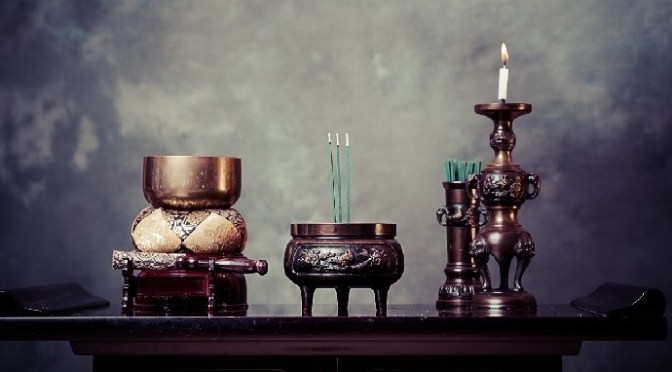
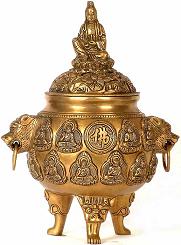
Một phụ nữ ở Nagasaki tên Kame là một trong số rất ít nghệ nhân làm lư hương ở Nhật. Mỗi lư hương là một tác phẩm nghệ thuật, chỉ đặt trong phòng trà, trước bàn thờ gia đình.
Trước Kame, bố của chị đã là một nghệ nhân như vậy, và Kame rất mê uống rượu. Chị cũng hút thuốc và giao tiếp với đàn ông thường xuyên. Khi nào có được ít tiền, chị làm tiệc mời nghệ sĩ, thi sĩ, thợ mộc, lao động, đàn ông đủ mọi ngành nghề chính cũng như nghề tay trái. Nhờ giao thiệp với đàn ông, Kame triển khai các thiết kế nghệ thuật của chị.
Kame làm việc rất chậm, nhưng khi một tác phẩm đã xong nó luôn luôn là một đại tác phẩm. Các lư hương của chị được qúy trọng trong các gia đình mà phụ nữ không bao giờ uống rượu, hút thuốc, hay giap tiếp tự do với đàn ông.
Có một lần thị trưởng thành phố Nagasaki nhờ chị làm một lư hương cho ông. Chị trì hoãn cả nửa năm. Rồi thị trưởng được thăng chức vào một chức vụ tại một thành phố khác, đến thăm chị. Ông hối chị khởi sự làm lư hương cho ông.
Cuối cùng cũng tìm ra hứng khởi, Kame làm lư hương. Sau khi hoàn tất, chị đặt nó trên bàn. Ngắm nghía thật lâu và cẩn thận. Chị hút thuốc và uống rượu trước nó như là trước mặt bạn bè. Chị quan sát nó cả ngày.
Cuối cùng, cầm cái búa, chị đập nó thành từng mảnh vụn. Chị thấy nó không được hoàn toàn như tâm chị đòi hỏi.
Bình:
• Kame sống theo cách mà người đời cho là bậy bạ, là xấu, nhất là vào thời xưa.
Kame tạo ra cái mà người đời tôn trọng nhất trong nhà — đặt trước bàn thờ tổ tiên để đốt hương.
Vì sao?
Vì cách sống của Kame cho Kame ý tưởng sáng tạo (từ các người bạn nam đủ loại), và vì Kame đặt hết tim óc vào việc sáng tạo. Chị tuân theo kỹ luật sáng tạo — có hứng khởi mới làm, không hứng không làm.
• Thường thì các nghệ sĩ sống rất “bất trật tự” – ăn ngủ vô điều độ, làm việc thì có hứng mới làm được, hút thuốc, uống cà phê đậm, uống rượu, tình cảm nam nữ thì lăng nhăng… Họ vui nhiều và đau khổ cũng nhiều. Chính lối sống bất trật tự như vậy cho họ sáng tạo nghệ thuật. Có lẽ vì sáng tạo đòi hỏi nhiều tình cảm lên xuống, vui và đau, và lối sống tự do của tâm trí.
• Dù là thị trưởng đặt hàng thì hứng không có là không có, và không có hứng thì không làm, kể cả làm cho thị trưởng.
Làm xong, không ưng ý là đập bỏ, dù thị trưởng đã đợi hơn 6 tháng rồi. Và cũng có nghĩa là không có tiền Lư Hương cho thị trưởng.
Đó chính là “nghệ thuật trên hết.”
• Sản phẩm của tim óc đến từ khả năng của tim óc lấy chất liệu từ chính cuộc sống của mình — dù đó là cuộc sống người khác cho là xấu — và biến chất liệu đó thành sản phẩm với kỹ luật cao nhất của sáng tạo.
• Các thiền sư Ikkyu hay Tosui, sống kiểu “phóng túng”–lang thang ngoài đường hơn là tu trong chùa–hay Tanzan uống rượu, lấy chật liệu từ cuộc sống “bất kỷ luật” đó, dùng kỹ luật của tim óc để tạo ra những tư tưởng Phật pháp — như các bài thiền thi nổi tiếng của Ikkyu hay câu chuyện bế người đẹp qua vũng bùn của Tanzan. Những giáo pháp đó cũng được người đời quý trọng.
• Không thể dùng cách sống bên ngoài để định giá tâm hay sản phẩm của tâm được.
• Khi tâm đã vững như các thiền sư đã giác ngộ, thì bên ngoài thế nào cũng chẳng nghĩa lý gì đến tâm.
Nhưng, nếu tâm chưa ngộ, chưa vững, mà phóng túng bên ngoài thì đó chẳng phải là nuôi khỉ hoang mà chẳng có chuồng sao?
Cho nên bên ngoài thường quan trọng cho người chưa ngộ, và không quan trọng cho người đã ngộ.
Người chưa ngộ phải nắm bên ngoài mà tu tập, nhưng nếu không biết khi nào phải bỏ bên ngoài, tức là cứ “chấp” vào bên ngoài, thì cũng chẳng bao giờ giải phóng tâm bên trong được.
(Trần Đình Hoành dịch và bình)
Với yêu thương,
Hoành
o0o
Lư hương – Incense Burner
Dear Brothers and Sisters,
A woman of Nagasaki named Kame was one of the few makers of incense burners in Japan. Such a burner is a work of art to be used only in a tearoom, before a family shrine.
Kame, whose father before her had been such an artist, was fond of drinking. She also smoked and associated with men most of the time. Whenever she made a little money she gave a feast inviting artists, poets, carpenters, workers, men of many vocations and avocations. In their association she evolved her designs.
Kame was exceedingly slow in creating, but when her work was finished it was always a masterpiece. Her burners were treasured in homes whose womanfolk never drank, smoked, or associated freely with men.
The mayor of Nagasaki once requested Kame to design an incense burner for him. She delayed doing so until almost half a year had passed. At that time the mayor, who had been promoted to office in a distant city, visited her. He urged Kame to begin work on his burner.
At last receiving the inspiration, Kame made the incense burner. After it was completed she placed it upon a table. She looked at it long and carefully. She smoked and drank before it as if it were her own company. All day she observed it.
At last, picking up a hammer, Kame smashed it to bits. She saw it was not the perfect creation her mind demanded.
Annotation:
• Kame lived in a way that people considered to be vulgar and bad, especially in ancient times.
Kame created what people respected most in the house — placed it in front of the ancestral altar to burn incense.
Why?
Because Kame’s way of life gave her creative ideas (from all sorts of male friends), and because Kame put her whole heart and mind into creating. She followed the discipline of creativity — working only when inspired, and not when uninspired.
• Artists usually live a very “disorderly” life — eating and sleeping irregularly, only working when inspired, smoking, drinking strong coffee, drinking alcohol, having promiscuous relationships… They have a lot of joy and a lot of suffering. It is this disorderly lifestyle that allows them to create art. Perhaps because creativity requires a lot of ups and downs, joy and pain, and a free lifestyle of the mind.
• Even if the mayor orders it, if there is no inspiration, it is not done.
When it is done, if it is not satisfactory, it is destroyed, even if the mayor has waited for more than 6 months. And that also means there is no money for the Incense Burner for the mayor.
That is “art above all.”
• The product of the heart and mind comes from the ability of the heart and mind to take material from one’s own life — even if it is a life that others consider bad — and turn that material into a product with the highest discipline of creativity.
• Zen masters Ikkyu or Tosui, who lived a “loose” life — wandering the streets rather than practicing in a temple — or Tanzan who drank alcohol, took material from that “undisciplined” life, and used the discipline of their hearts and minds to create Buddhist thoughts — such as Ikkyu’s famous Zen poems or the story carrying a beauty through the mud puddle of Tanzan. Those teachings are also highly respected by the world.
• One cannot use the external way of life to evaluate the mind or the products of the mind.
• When the mind is as steady as the enlightened Zen masters, then the external is meaningless to the mind.
However, if the mind is not yet enlightened, not yet steady, and is indulging in the external, isn’t that like raising a wild monkey without a cage?
Therefore, the external is often important for the unenlightened, and not important for the enlightened.
The unenlightened must grasp the external to practice, but if they don’t know when to let go of the external, that is, keep “attaching” to the external, then they will never be able to liberate the mind inside.
(Translated and commented by Tran Dinh Hoanh)
With compassion,
Hoành
o0o
© copyright 2025
Trần Đình Hoành
Permitted for non-commercial use
www.dotchuoinon.com
# 79
 Đọt Chuối Non